Replacing a Front Tooth with an Implant: What to Expect

No Dental Insurance? How In-Office Savings Plans Work
October 7, 2026
Why a Root Canal Tooth Often Needs a Crown
November 6, 2026
Losing a front tooth is different from losing a molar. It is the tooth everyone sees first, so replacing it well means addressing both cosmetic and structural problems at the same time. Our clinical team treats Livonia dental implants for the front of the mouth as a separate category of cases, since a single central incisor demands more precision in shade, contour, and gum shaping than a tooth further back.
Patients considering this kind of replacement usually have similar questions: how long the whole process takes, whether the crown will actually match, and what happens underneath the gum while everything heals. The answer to all three starts with understanding that an implant is not one procedure but a sequence of smaller ones, each building on the last.
Why the Front of Your Mouth Is a Different Job
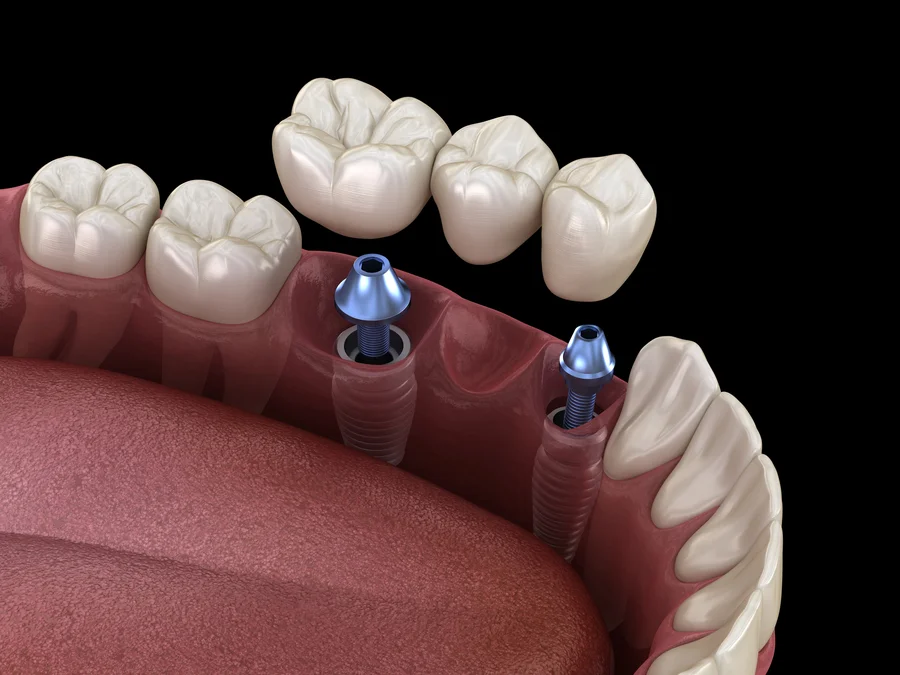
A back tooth mostly needs to chew well. A front tooth needs to chew well and disappear into your smile, matching the translucency, length, and slight color variation of the teeth beside it. According to the American Dental Association, a single tooth implant is completed in three general phases: surgical placement, a healing period called osseointegration, and finally the custom crown itself, sized, shaped, and colored to blend with your natural teeth.
What Actually Happens Underneath the Gum
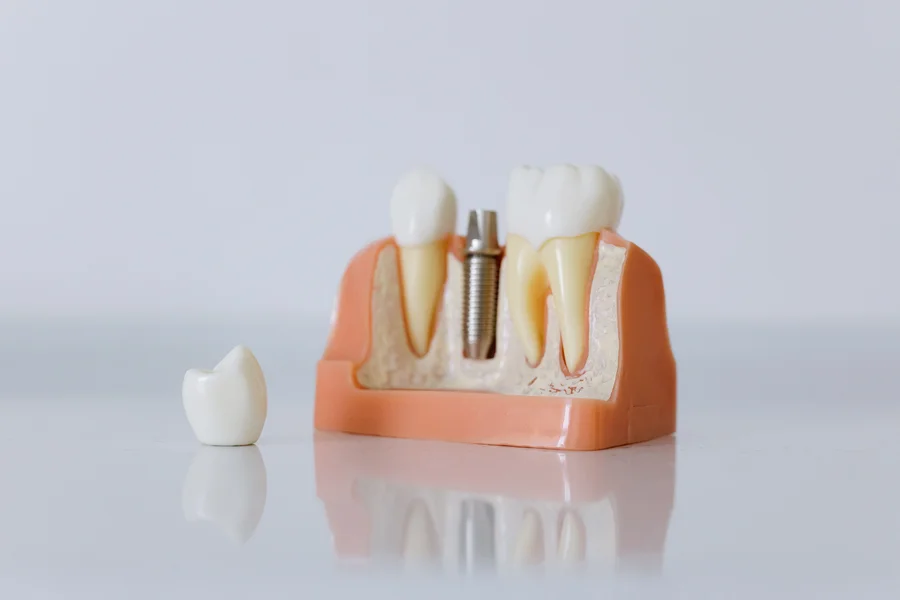
Osseointegration is not one single event. A cross-disciplinary review of implant research published through the National Library of Medicine breaks the process into four stages: an initial healing stage right after placement, an inflammatory stage that clears debris and starts signaling repair, a proliferative stage where new bone forms around the implant surface, and a remodeling stage that strengthens the final bond.
For most Livonia dental implants patients, this underground process takes a few months before the visible crown ever goes on.
Getting the Crown to Disappear
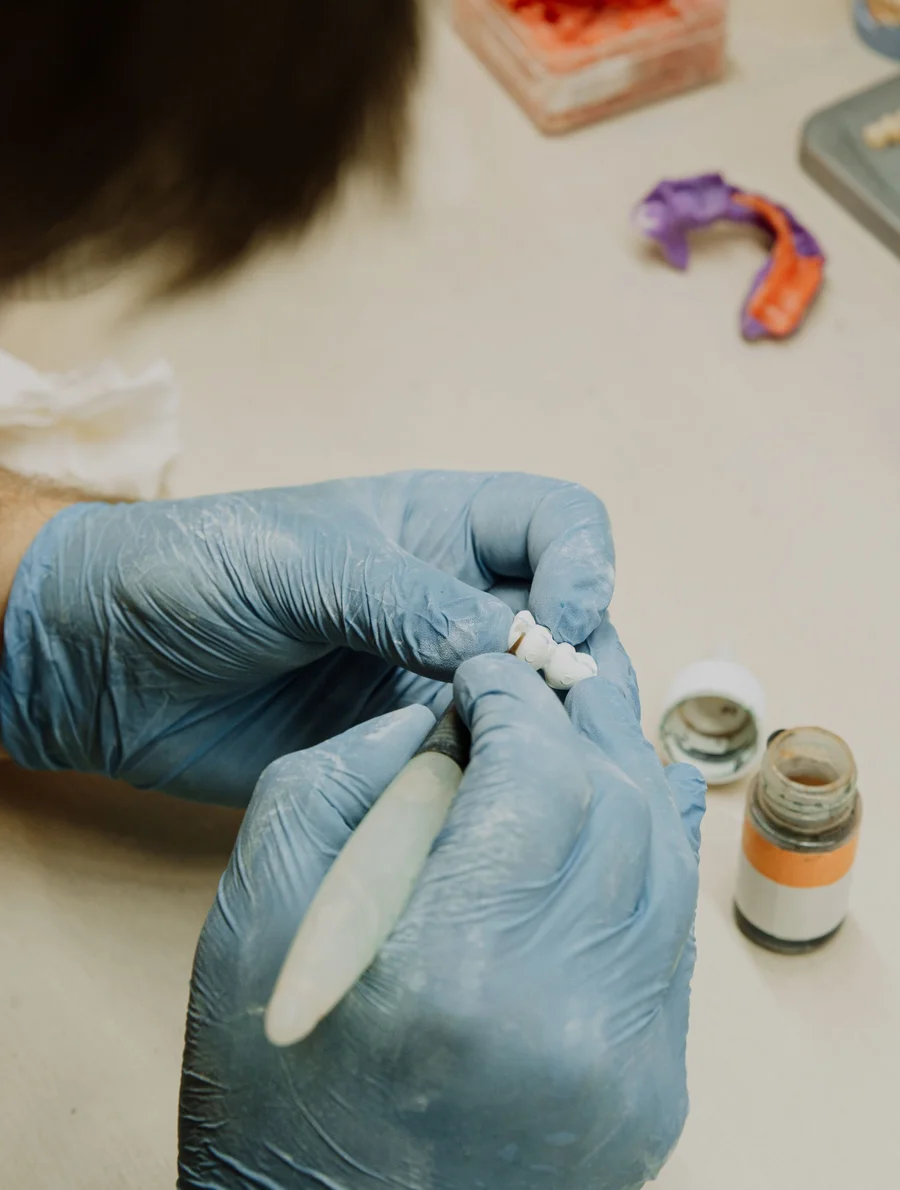
The visible half of the job is arguably the harder one. Front-tooth restorations are shaded and shaped by hand to match the exact translucency of the teeth on either side, then checked against your gumline so the crown’s edge sits naturally rather than looking pasted on. This is the same attention to detail that goes into our cosmetic dentistry work more broadly, since a mismatched crown is often more noticeable than the gap it replaced.
Getting this right usually takes more than one appointment. A dentist working on Livonia dental implants in the front of the mouth will often compare shade tabs against your teeth under different lighting, photograph the surrounding teeth for the dental lab, and ask you to approve the shade before the final crown is ever milled or fired.
When an Implant Isn’t the First Step
Not every front-tooth problem calls for a full implant. A chipped or slightly discolored tooth that is still structurally sound is often better served by porcelain veneers, which cover the visible surface without removing the root.
On the other hand, if a tooth was actually knocked out in an accident or sports injury, same-day avulsion care matters more than which replacement option you eventually choose, since fast handling improves the odds of saving the natural tooth. If reimplantation is not possible, an implant often becomes the long-term solution once the socket has healed.
A single front-tooth implant generally moves through the following stages:
- Consultation and imaging to check bone density and plan the angle of placement
- Surgical placement of the titanium post
- A healing period while osseointegration takes place
- Impressions and shade selection for the custom crown
- Final crown placement and bite adjustment
Considering Livonia Dental Implants for a Front Tooth?
A front tooth deserves the same care whether it was lost to decay, trauma, or years of wear. Bloink Dental walks patients through every stage of dental implant treatment, from the first scan to the final shade match, so the result blends in rather than standing out.
Contact us today to schedule a consultation and find out whether an implant, a veneer, or another option is the best fit for your situation.